Epiroc Revolutionizes Underground Mining with IP65-Rated Charging Technology
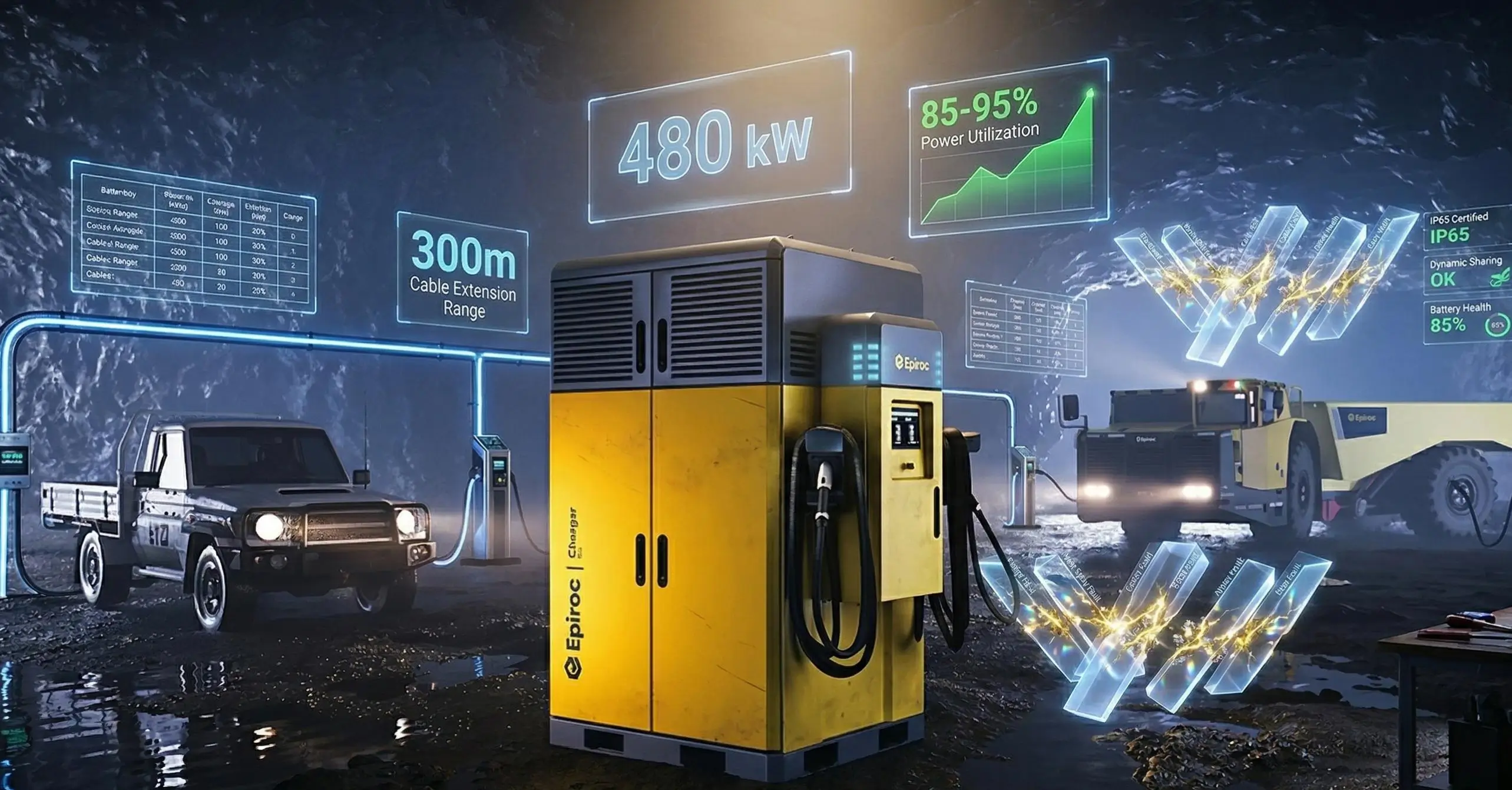
The shift from diesel mechanical to battery-electric vehicles (BEVs) is one of the most significant technological transitions in modern mining. For underground operations, this evolution presents distinct challenges that surface applications rarely encounter, requiring specialized engineering for power distribution, environmental protection, and fleet optimization. Addressing these critical needs, Epiroc has launched its next-generation charging solution, specifically designed to perform reliably under the extreme conditions of subsurface environments.
“Our new charging solution is the result of years of experience from the field, delivering reliable power where it’s needed and giving customers the operational flexibility to get the most from their electrified vehicles – regardless of the manufacturer,”
— Trent Sears, Global Product Manager – EV Infrastructure at Epiroc
This OEM-agnostic approach is crucial for mines operating mixed fleets, providing a unified "one charging solution" across different battery technologies and manufacturers. Engineered for the toughest underground conditions, the new chargers feature an IP65-classified design, providing complete protection against dust infiltration and resistance to water jets—addressing environmental stressors that quickly compromise surface-grade equipment.
Table 1 provides an overview of how the new solution addresses common underground environmental factors.
Table 1: Environmental Resilience Factors
| Environmental Factor | Challenge to Standard Equipment | Epiroc Solution |
|---|---|---|
| Dust Infiltration | Fine silica particles smaller than 10 microns penetrate enclosures, causing electrical failures. | IP65-certified dust-tight protection. |
| Moisture/Humidity | Groundwater seepage and ventilation condensation create corrosion risks and short circuits. | IP65 water jet resistance from all directions. Humidity tolerance from 60-95%. |
| Temperature | Deep operations near active faces can exceed 60°C (140°F), compromising standard components. | Designed for ambient temperatures exceeding 50°C (122°F). |
| Vibration | Continuous mechanical stress from drilling and heavy equipment operation loosens connections. | Ruggedized, heavy-duty engineering. |
Decentralized Charging for Operational Flexibility
Underground spatial constraints dictate infrastructure placement. Epiroc’s modular design allows for flexible installation strategies, including wall-mounted configurations for narrow tunnels and pedestal-mounted systems for wider chambers. A key advantage is the ability to place remote charge posts up to 300 meters (approximately 985 feet) from the central electrical cabinet.
This decentralization enables strategic placement near active mining faces, significantly reducing non-productive tramming time and associated energy consumption. It supports a "power close to the face" strategy, essential for maintaining high equipment utilization throughout every shift.
Dynamic Power Sharing Optimizes Fleet Performance
Traditional charging systems with fixed power allocation often create bottlenecks during peak demand, such as shift changes. Epiroc’s dynamic power sharing technology represents a fundamental shift toward intelligent energy distribution. The microprocessor-based system monitors battery states across up to eight charging posts simultaneously, automatically redistributing available capacity based on real-time operational priorities.
“To further boost productivity, the chargers support dynamic power sharing across up to eight posts per cabinet. This allows available capacity to be directed to where it’s needed, adapting in real time to changing fleet patterns and helping maintain high equipment utilization throughout every shift,”
— Trent Sears, Global Product Manager – EV Infrastructure at Epiroc
By directing maximum power to vehicles with the lowest charge, the system balances depletion rates across the fleet. This intelligent allocation reduces peak electrical demand—potentially lowering utility charges by 15-25%—while ensuring consistent vehicle readiness and reducing stress on electrical infrastructure.
Table 2 compares traditional fixed power allocation with the new dynamic sharing model.
Table 2: Fixed Power Allocation vs. Dynamic Power Sharing
| Operational Metric | Traditional Fixed Systems | Dynamic Power Sharing |
|---|---|---|
| Power Utilization Efficiency | 60-70% average | 85-95% average |
| Queue Management | Static scheduling | Adaptive prioritization |
| Peak Demand Characteristics | Fixed maximum loads | Variable optimization |
| Fleet Availability | Schedule-dependent | Demand-responsive |
Economic Impact and Infrastructure Integration
The transition to electric mining equipment generates substantial economic benefits, starting with the elimination of diesel fuel costs, which typically represent 15-20% of total operational expenses in underground mining. Advanced charging protocols also extend battery and vehicle lifespan, while reduced exhaust emissions significantly lower ventilation system costs.
Epiroc’s solution supports advanced monitoring through comprehensive telematics, tracking charge sessions and providing data essential for optimizing fleet management. The inclusion of plug-and-play electronics simplifies serviceability, installation, and configuration. Successful deployment requires comprehensive planning, addressing electrical capacity, safety compliance with underground regulations, and integration with existing mine automation systems.
As the mining industry accelerates toward automation and digitalization, advanced charging infrastructure becomes a critical enabler. It provides essential compatibility with autonomous vehicle protocols and supports unmanned operation in hazardous areas. For decision-makers, the adoption of sophisticated underground charging solutions like Epiroc’s offers competitive advantages through operational cost reductions, improved safety performance, and enhanced environmental compliance.